
Editorial, company.com
What to write on a get well flower delivery card

For a get well flower delivery card, write a short message that says you are thinking of the recipient, wishes them comfort, and ends with your name. A simple example is: Thinking of you and sending a little brightness for your day. No need to reply—just know I care. Love, Emma.
- Get well flower delivery cards work best with a personal message, a gentle wish, and a clear signature.
- Chris Petals sells get-well gifts; confirm the recipient’s delivery location and date before ordering.
- For serious illness, say thinking of you rather than promising a quick recovery.
- Offer specific help only when you can follow through, and make replying optional.
What should you write on a get well flower delivery card?
Write about your care for the person, not your predictions about their recovery. You do not need an original saying or a long explanation. A familiar, sincere message is enough.
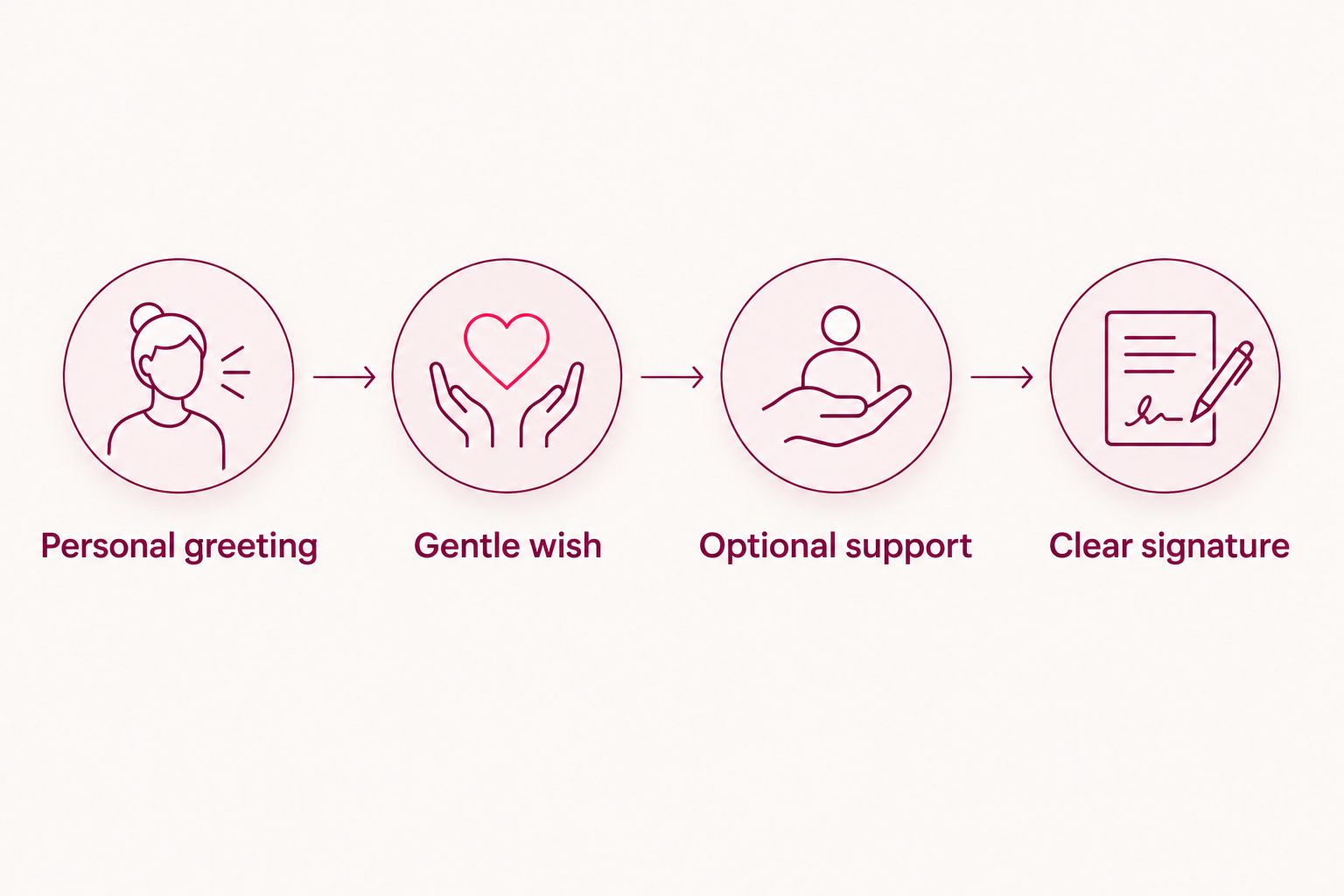
Build your card in this order:
- Personal greeting. Use the name you normally call the recipient. Keep pet names for relationships where they already feel natural.
- Gentle wish. Say you are thinking of them or wishing them comfort. Avoid setting a deadline for feeling better.
- Optional support. Add a specific offer you can keep, or make clear that no reply is needed.
- Clear signature. Sign your name, even when the recipient knows you well. For a group gift, identify the group.
This gives you a useful starting point: Dear Maya, thinking of you and wishing you a restful day. No need to reply. With love, Sophie. Change the greeting and sign-off to match your relationship.
Keep medical details out of the delivery instructions and card. If the flowers are going to a facility, use this guide to get well flower delivery to a hospital before choosing the destination.
Why this matters
A get-well card should express support without asking the recipient to explain their condition, reassure you, or return to their usual routine. Your message can be warm without being upbeat about something you do not understand.
For a get-well gift in 2026, separate the emotional message from the ordering details. Put your affection on the card. Check the address, requested date, recipient details, and full checkout total separately.
You can also skip the phrase get well soon. Thinking of you works when recovery is uncertain, treatment is ongoing, or you simply do not know the details.
A close friend: personal and familiar
Best for: a friend whose usual tone you know well. Mention something familiar without making the card about what they are missing. A small personal reference makes the message sound like you.
Try one of these sample messages:
- Sending flowers and a big hug. I’m thinking of you, and there’s no need to text back. Love, Nina.
- You’ve been on my mind. Wishing you some comfort today, and looking forward to a quiet catch-up whenever you feel ready. Love, Alex.
- A little color for your room and lots of love from me. I’m here if you want company—or quiet. Jamie.
The strength of a familiar message is that it feels personal. The drawback is that an inside joke or cheerful reference can land badly if it makes light of the illness. Keep the humor about your friendship, not their symptoms.
A family member or partner: affectionate without pressure
Best for: someone with whom you already share affectionate language. Use your normal voice. You do not need to make the message more formal because it will be printed on a florist’s card.
Choose a message such as:
- I love you. These flowers are a small reminder that you don’t have to handle everything alone. Always, Sam.
- Thinking of you, Mom, and sending all my love. Rest whenever you need to. Love, Grace.
- A little something for your bedside. I’m here, and you don’t need to put on a brave face for me. Love, Daniel.
Affection can make a short card feel complete. Avoid turning it into a request for reassurance, though. Leave out lines such as I can’t cope without you or Please get better for me.
If you want to offer help, keep the promise realistic. I can pick up groceries on Saturday if that would help is clearer than I’ll take care of everything.
A coworker: warm, brief, and private
Best for: a professional relationship or a team gift. Keep the message kind without mentioning medical details. Do not refer to unfinished work, return dates, or how busy the team is without them.
Useful examples include:
- Thinking of you and wishing you comfort. Warm wishes, Priya.
- Sending our best wishes and a little brightness for your day. From everyone on the customer support team.
- We’re thinking of you. No need to reply—this is simply a note to say we care. Your colleagues at the studio.
A professional message protects privacy and avoids overfamiliarity. Its limitation is that a generic sign-off can leave the sender unclear. Include your name or a recognizable team name rather than signing only Everyone.
Before sending a group gift, agree on the wording. Do not include a diagnosis just because one colleague has shared it privately.
Serious illness or ongoing treatment: care without predictions
Best for: uncertain recovery, long-term illness, or circumstances you do not fully know. Focus on the present. Wishes for comfort and connection do not require you to predict what comes next.
These sample messages keep that balance:
- Thinking of you today and sending love. No need to respond. With care, Olivia.
- I don’t have the perfect words, but I want you to know I’m here. Sending a little color and a lot of love. Ben.
- Wishing you moments of comfort today. You’re in my thoughts. Warmly, Rachel.
This approach leaves room for the recipient’s actual experience. The trade-off is that it can sound distant if you remove every personal detail. Use a familiar greeting or affectionate sign-off when your relationship supports it.
Avoid You’ll beat this, Everything happens for a reason, and You’ll be back to normal soon. You can express hope without presenting an outcome as certain.
Which card style fits your relationship?
Choose the tone before choosing the exact words. This comparison is a writing guide, not a rule about how every recipient wants to be addressed.
| Card style | Best for | What works | What to avoid |
|---|---|---|---|
| Personal and familiar | A close friend | A familiar detail and your usual sign-off | Humor about illness or symptoms |
| Affectionate | A partner or family member | Direct affection and realistic support | Asking them to recover for your sake |
| Warm and professional | A coworker or team gift | Kind wishes and a clear sender | Medical details or return-to-work pressure |
| Quiet and supportive | Serious illness or uncertain recovery | Comfort, presence, and an optional reply | Promises about recovery |
When you are unsure, choose quiet and supportive. You can still sound friendly. A short, considerate message is better than an elaborate one built around assumptions.
Why get-well card wording varies
The right wording depends on what you actually know about the recipient. Use these factors to edit your message:
- Your relationship. Write as a friend, relative, partner, or colleague—not as a medical adviser.
- What they have shared. Acknowledge only the details they have chosen to tell you.
- Their usual tone. Use humor or affectionate language only when it fits your existing relationship.
- Recovery uncertainty. Replace predictions with wishes for comfort when the outcome or timeline is unknown.
- The delivery setting. Keep sensitive information off a card that others could see.
- Your ability to help. Offer a task you can complete rather than an open-ended promise.
Do not treat a birthday, anniversary, and get-well card as interchangeable. Birthday wishes celebrate the day; anniversary messages celebrate a relationship. A get-well card should center care without requiring a celebratory response.
Can you write a funny get-well message?
Use humor only when you already know the recipient welcomes it. A joke about your shared interests is a better choice than a joke about treatment, pain, or appearance.
For a friend who enjoys light humor, try: A little color for your room, because my interior-design advice would be much less useful. Thinking of you. Love, Max. Keep the caring part explicit so the joke does not have to carry the whole message.
Skip humor when you are unsure. You do not need to entertain someone to show that you care.
What can you write instead of get well soon?
Use thinking of you when a recovery wish does not fit. Other options include Sending love, Wishing you comfort today, and You’re on my mind.
A complete card could read: Thinking of you and wishing you a peaceful afternoon. No need to reply. With love, Hannah. It expresses support without suggesting that the recipient should be improving on a schedule.
Should you offer help on a flower delivery card?
Offer 1 specific task only when you can follow through. Grocery pickup, a meal drop-off, or a school run are examples to consider if they fit your relationship and the recipient’s needs.
Keep the offer easy to decline: I can pick up groceries on Saturday if that would help—no pressure. Arrange the details privately rather than adding a long list of questions to the card.
Match the flowers to the message, then check the order
Chris Petals is a get-well gift option for US shoppers sending flowers and a personal card. The florist sells bouquets, roses, plants, and get-well gifts. Confirm the specific destination, date, and delivery conditions before placing an order.
Choose the arrangement around the recipient’s preferences and setting, not a claim that a particular flower will improve recovery. For example, Forever Well Wishes is described as an arrangement for get-well wishes, thank-yous, and thinking of you. Its description does not establish hospital permission or suitability for a particular recipient.
For a Chris Petals get well flower delivery in 2026, check these details before payment:
- Recipient details. Confirm the name and address, including any required facility information.
- Delivery date. Verify the selected date, eligibility, and any current cutoff rather than assuming same-day service applies.
- Arrangement details. Read the selected option’s description and check what is included.
- Card preview. Check spelling, punctuation, the signature, and any stated character limit.
- Checkout total. Review delivery charges and any selected extras, not just the arrangement listing.
Same-day delivery is part of the brand’s offering, but it is not a reason to assume every location or requested date qualifies. Your 2026 order confirmation should match the destination and date you intended.
Read the card once before submitting
Aim for 2 short sentences plus your signature as a drafting guide, not a florist character limit. Keep a longer message for a private note or later conversation.
Make 3 final checks: Does the card sound like you? Does it avoid a recovery prediction? Is the sender clear? Remove any sentence that asks the recipient to update you or make you feel better.
For your 2026 card draft, read the words aloud. If you would not say them naturally, simplify them. Thinking of you and sending love is enough when that is what you mean.
FAQ
What’s a simple message for a get well flower delivery card?
A simple message is: Thinking of you and wishing you comfort today. No need to reply. Add your name and use the sign-off you normally use with the recipient.
What should I write if someone is seriously ill?
Write a message of care without predicting recovery. Thinking of you, sending love, or wishing you comfort keeps the focus on support rather than an uncertain outcome.
Is it okay to write get well soon to a coworker?
Get well soon fits when the coworker’s circumstances make that wish appropriate; thinking of you is a safer choice when you do not know. Keep the message private, warm, and free of return-to-work expectations.
How long should a get-well flower card be?
Use 2 short sentences plus your signature as a drafting guide, then check the florist’s actual character limit. A brief message can express care without asking the recipient to read a long explanation.
Should I put my name on a get-well flower card?
Yes, include your name so the recipient knows who sent the flowers. For a group gift, use a recognizable team or family name, or list the senders if the card allows.
Can I send get-well flowers without asking for a reply?
Yes, you can explicitly make replying optional. Add no need to reply if you want the card to express care without creating another task for the recipient.
What should I check before ordering get-well flowers in 2026?
Check the delivery address, requested date, current eligibility, any facility restrictions, and the full checkout total. For a Chris Petals order, also review the card preview and current delivery conditions before paying.
One last thing
You do not need to mention the illness at all. A card can simply acknowledge the person: You’re on my mind, and I wanted to send a little color your way. With love, Ella.
Before submitting your 2026 order, remove any sentence that needs a reply to feel complete. The flowers and card can be a gesture of care on their own.
Related guides
- Get well flower delivery for someone recovering at home
- How much does flower delivery cost?
- What to write on an anniversary flower delivery card
- How to choose a birthday bouquet for delivery
Related articles
What to write on a get well flower delivery card
For a get well flower delivery card, write a short message that says you are thinking of the recipient, wishes them comfort, and ends with your name. A simple example is: Thinking of you and sending a little brightness for your day. No need to reply—just know I care. Love, Emma. TL;DR Get well flower delivery cards work best with a personal message, a gentle wish, and a clear signature. Chris Petals sells get-well gifts; confirm the recipient’s delivery location and date before ordering. For serious illness, say thinking of you rather than promising a quick recovery. Offer specific help only when you can follow through, and make replying optional. What should you write on a get well flower delivery card? Write about your care for the person, not your predictions about their recovery. You do not need an original saying or a long explanation. A familiar, sincere message is enough. Build your card in this order: Personal greeting. Use the name you normally call the recipient. Keep pet names for relationships where they already feel natural. Gentle wish. Say you are thinking of them or wishing them comfort. Avoid setting a deadline for feeling better. Optional support. Add a specific offer you can keep, or make clear that no reply is needed. Clear signature. Sign your name, even when the recipient knows you well. For a group gift, identify the group. This gives you a useful starting point: Dear Maya, thinking of you and wishing you a restful day. No need to reply. With love, Sophie. Change the greeting and sign-off to match your relationship. A caring message does not need a recovery prediction.Keep medical details out of the delivery instructions and card. If the flowers are going to a facility, use this guide to get well flower delivery to a hospital before choosing the destination. Why this matters A get-well card should express support without asking the recipient to explain their condition, reassure you, or return to their usual routine. Your message can be warm without being upbeat about something you do not understand. For a get-well gift in 2026, separate the emotional message from the ordering details. Put your affection on the card. Check the address, requested date, recipient details, and full checkout total separately. You can also skip the phrase get well soon. Thinking of you works when recovery is uncertain, treatment is ongoing, or you simply do not know the details. A close friend: personal and familiar Best for: a friend whose usual tone you know well. Mention something familiar without making the card about what they are missing. A small personal reference makes the message sound like you. Try one of these sample messages: Sending flowers and a big hug. I’m thinking of you, and there’s no need to text back. Love, Nina. You’ve been on my mind. Wishing you some comfort today, and looking forward to a quiet catch-up whenever you feel ready. Love, Alex. A little color for your room and lots of love from me. I’m here if you want company—or quiet. Jamie. The strength of a familiar message is that it feels personal. The drawback is that an inside joke or cheerful reference can land badly if it makes light of the illness. Keep the humor about your friendship, not their symptoms. A family member or partner: affectionate without pressure Best for: someone with whom you already share affectionate language. Use your normal voice. You do not need to make the message more formal because it will be printed on a florist’s card. Choose a message such as: I love you. These flowers are a small reminder that you don’t have to handle everything alone. Always, Sam. Thinking of you, Mom, and sending all my love. Rest whenever you need to. Love, Grace. A little something for your bedside. I’m here, and you don’t need to put on a brave face for me. Love, Daniel. Affection can make a short card feel complete. Avoid turning it into a request for reassurance, though. Leave out lines such as I can’t cope without you or Please get better for me. If you want to offer help, keep the promise realistic. I can pick up groceries on Saturday if that would help is clearer than I’ll take care of everything. A coworker: warm, brief, and private Best for: a professional relationship or a team gift. Keep the message kind without mentioning medical details. Do not refer to unfinished work, return dates, or how busy the team is without them. Useful examples include: Thinking of you and wishing you comfort. Warm wishes, Priya. Sending our best wishes and a little brightness for your day. From everyone on the customer support team. We’re thinking of you. No need to reply—this is simply a note to say we care. Your colleagues at the studio. A professional message protects privacy and avoids overfamiliarity. Its limitation is that a generic sign-off can leave the sender unclear. Include your name or a recognizable team name rather than signing only Everyone. Before sending a group gift, agree on the wording. Do not include a diagnosis just because one colleague has shared it privately. Serious illness or ongoing treatment: care without predictions Best for: uncertain recovery, long-term illness, or circumstances you do not fully know. Focus on the present. Wishes for comfort and connection do not require you to predict what comes next. These sample messages keep that balance: Thinking of you today and sending love. No need to respond. With care, Olivia. I don’t have the perfect words, but I want you to know I’m here. Sending a little color and a lot of love. Ben. Wishing you moments of comfort today. You’re in my thoughts. Warmly, Rachel. This approach leaves room for the recipient’s actual experience. The trade-off is that it can sound distant if you remove every personal detail. Use a familiar greeting or affectionate sign-off when your relationship supports it. Avoid You’ll beat this, Everything happens for a reason, and You’ll be back to normal soon. You can express hope without presenting an outcome as certain. Which card style fits your relationship? Choose the tone before choosing the exact words. This comparison is a writing guide, not a rule about how every recipient wants to be addressed. Card style Best for What works What to avoid Personal and familiar A close friend A familiar detail and your usual sign-off Humor about illness or symptoms Affectionate A partner or family member Direct affection and realistic support Asking them to recover for your sake Warm and professional A coworker or team gift Kind wishes and a clear sender Medical details or return-to-work pressure Quiet and supportive Serious illness or uncertain recovery Comfort, presence, and an optional reply Promises about recovery When you are unsure, choose quiet and supportive. You can still sound friendly. A short, considerate message is better than an elaborate one built around assumptions. Why get-well card wording varies The right wording depends on what you actually know about the recipient. Use these factors to edit your message: Your relationship. Write as a friend, relative, partner, or colleague—not as a medical adviser. What they have shared. Acknowledge only the details they have chosen to tell you. Their usual tone. Use humor or affectionate language only when it fits your existing relationship. Recovery uncertainty. Replace predictions with wishes for comfort when the outcome or timeline is unknown. The delivery setting. Keep sensitive information off a card that others could see. Your ability to help. Offer a task you can complete rather than an open-ended promise. Do not treat a birthday, anniversary, and get-well card as interchangeable. Birthday wishes celebrate the day; anniversary messages celebrate a relationship. A get-well card should center care without requiring a celebratory response. Can you write a funny get-well message? Use humor only when you already know the recipient welcomes it. A joke about your shared interests is a better choice than a joke about treatment, pain, or appearance. For a friend who enjoys light humor, try: A little color for your room, because my interior-design advice would be much less useful. Thinking of you. Love, Max. Keep the caring part explicit so the joke does not have to carry the whole message. Skip humor when you are unsure. You do not need to entertain someone to show that you care. What can you write instead of get well soon? Use thinking of you when a recovery wish does not fit. Other options include Sending love, Wishing you comfort today, and You’re on my mind. A complete card could read: Thinking of you and wishing you a peaceful afternoon. No need to reply. With love, Hannah. It expresses support without suggesting that the recipient should be improving on a schedule. Should you offer help on a flower delivery card? Offer 1 specific task only when you can follow through. Grocery pickup, a meal drop-off, or a school run are examples to consider if they fit your relationship and the recipient’s needs. Keep the offer easy to decline: I can pick up groceries on Saturday if that would help—no pressure. Arrange the details privately rather than adding a long list of questions to the card. Match the flowers to the message, then check the order Chris Petals is a get-well gift option for US shoppers sending flowers and a personal card. The florist sells bouquets, roses, plants, and get-well gifts. Confirm the specific destination, date, and delivery conditions before placing an order. Choose the arrangement around the recipient’s preferences and setting, not a claim that a particular flower will improve recovery. For example, Forever Well Wishes is described as an arrangement for get-well wishes, thank-yous, and thinking of you. Its description does not establish hospital permission or suitability for a particular recipient. For a Chris Petals get well flower delivery in 2026, check these details before payment: Recipient details. Confirm the name and address, including any required facility information. Delivery date. Verify the selected date, eligibility, and any current cutoff rather than assuming same-day service applies. Arrangement details. Read the selected option’s description and check what is included. Card preview. Check spelling, punctuation, the signature, and any stated character limit. Checkout total. Review delivery charges and any selected extras, not just the arrangement listing. Same-day delivery is part of the brand’s offering, but it is not a reason to assume every location or requested date qualifies. Your 2026 order confirmation should match the destination and date you intended. Read the card once before submitting Aim for 2 short sentences plus your signature as a drafting guide, not a florist character limit. Keep a longer message for a private note or later conversation. Make 3 final checks: Does the card sound like you? Does it avoid a recovery prediction? Is the sender clear? Remove any sentence that asks the recipient to update you or make you feel better. For your 2026 card draft, read the words aloud. If you would not say them naturally, simplify them. Thinking of you and sending love is enough when that is what you mean. FAQ What’s a simple message for a get well flower delivery card? A simple message is: Thinking of you and wishing you comfort today. No need to reply. Add your name and use the sign-off you normally use with the recipient. What should I write if someone is seriously ill? Write a message of care without predicting recovery. Thinking of you, sending love, or wishing you comfort keeps the focus on support rather than an uncertain outcome. Is it okay to write get well soon to a coworker? Get well soon fits when the coworker’s circumstances make that wish appropriate; thinking of you is a safer choice when you do not know. Keep the message private, warm, and free of return-to-work expectations. How long should a get-well flower card be? Use 2 short sentences plus your signature as a drafting guide, then check the florist’s actual character limit. A brief message can express care without asking the recipient to read a long explanation. Should I put my name on a get-well flower card? Yes, include your name so the recipient knows who sent the flowers. For a group gift, use a recognizable team or family name, or list the senders if the card allows. Can I send get-well flowers without asking for a reply? Yes, you can explicitly make replying optional. Add no need to reply if you want the card to express care without creating another task for the recipient. What should I check before ordering get-well flowers in 2026? Check the delivery address, requested date, current eligibility, any facility restrictions, and the full checkout total. For a Chris Petals order, also review the card preview and current delivery conditions before paying. One last thing You do not need to mention the illness at all. A card can simply acknowledge the person: You’re on my mind, and I wanted to send a little color your way. With love, Ella. Before submitting your 2026 order, remove any sentence that needs a reply to feel complete. The flowers and card can be a gesture of care on their own. Related guides Get well flower delivery for someone recovering at home How much does flower delivery cost? What to write on an anniversary flower delivery card How to choose a birthday bouquet for delivery

How to choose get well flowers for someone sensitive to scents
For get well flower delivery in 2026, ask whether the recipient wants flowers, then choose an arrangement whose flower types and scent level the florist can confirm. Do not treat a bouquet photo, a get-well label, or a low-fragrance description as proof that the gift will suit them. If the recipient avoids flowers or their care setting restricts them, choose a gift they have approved instead. TL;DR For get well flower delivery, the recipient’s scent preferences come before bouquet size or color. Chrispetals bouquets need a scent check before you order for someone sensitive to fragrance. Hospital flower delivery requires permission from the recipient’s unit, not just a valid address. Low fragrance does not mean fragrance-free; confirm flower types, greenery, and substitutions. How do you choose get well flowers for someone sensitive to scents? Choose flowers only after the recipient accepts the idea and the florist confirms the proposed contents. Use these checks in order. If you are sending to a medical facility, start with the hospital flower delivery checklist; permission to receive flowers comes before bouquet selection. Ask the recipient. Find out whether flowers are welcome and whether they avoid particular scents or all floral fragrance. Check the destination. Confirm that the home, hospital unit, or recovery facility can accept the arrangement. Confirm the contents. Ask about flowers, greenery, and any scented extras rather than relying on the photograph. Set substitution limits. Explain which ingredients must not be added if the pictured flowers change. Check the finished order. Review the delivery details, full checkout total, and confirmation of your scent request before paying. Confirm that flowers are welcome before choosing the arrangement.Ask about preferences without asking for medical details A simple question is enough: would flowers be welcome, and are there any flowers or scents to avoid? You do not need the recipient’s diagnosis to respect their answer. If someone else coordinates their gifts, ask that person to check rather than guessing. Keep the question easy to answer. Offer the choice of flowers, another gift, or just a card, without making the recipient explain why. A clear no to flowers ends the bouquet search. Check the actual bouquet, not its occasion label A bouquet called a get-well arrangement tells you its intended occasion, not its fragrance. Color, container style, and stem count do not establish whether the recipient will tolerate it. Ask the florist to identify the flowers and greenery planned for your order. For a 2026 order, confirm the current arrangement details rather than relying on an earlier purchase. If the florist cannot explain the contents or accommodate the scent request, select another option. Do not turn an unanswered question into an assumption. Make substitutions part of the decision Ask whether the florist permits substitutions and whether your exclusions will still apply. A note requesting low fragrance is less useful than a confirmed instruction naming ingredients the recipient avoids. Be clear about what should happen if the florist cannot fulfill that instruction. You can ask the seller to contact you before making an unapproved change. Confirm that the seller can follow that request; typing it into an order-note box does not establish acceptance. Keep the response with your order confirmation. Why this matters A get-well gift should fit the recipient’s comfort and routine. Someone sensitive to fragrance should not have to move a bouquet out of their room, arrange a return, or explain why they cannot keep it nearby. The right buying decision is not necessarily a larger arrangement. It is a gift the person wants, delivered somewhere that accepts it, with contents you have checked. That approach also keeps a well-meant surprise from becoming another task during recovery. Which gift approach fits the recipient’s preferences? Best for someone who welcomes flowers: a bouquet with confirmed contents and agreed exclusions. If the recipient does not want floral scents, do not use a low-fragrance label to override that preference. Compare the approaches below before choosing a product. Gift approach Best for Advantage Limitation What to confirm Florist-confirmed low-fragrance bouquet Someone who wants flowers and accepts the proposed stems Lets you match the arrangement to stated preferences Low fragrance is not a promise of no scent Flowers, greenery, and substitution instructions Recipient-approved plant Someone who specifically wants a plant Offers an alternative to a cut-flower bouquet Plants are not automatically scent-free or permitted in care settings Exact plant, recipient preference, and destination rules Recipient-approved non-floral gift Someone who does not want flowers Avoids sending an unwanted bouquet Food, toiletries, and other contents need their own checks Contents, dietary needs, and any added fragrance Card without a physical gift Someone who wants no extra items Does not require space, water, or gift handling Does not suit someone who specifically wants a physical present Whether a message is their preferred gesture None of these choices is automatically suitable for every recipient. A plant can be unwanted, a care package can contain unsuitable items, and a bouquet can conflict with a facility’s rules. Use the recipient’s answer as the deciding factor, not the gift category. Low-fragrance bouquet: best for someone who has approved flowers Ask for the proposed flower types before choosing an arrangement size. If the recipient names a flower they tolerate, pass that information to the florist, but do not describe it as a medical guarantee. The florist still needs to confirm the actual contents. Keep size practical. Ask about the finished dimensions and container so you can judge whether the arrangement fits the intended table or bedside area. A larger bouquet is not a better choice when it adds ingredients the recipient has not approved. Non-floral gift: best for someone who has declined flowers Choose the alternative with the same care you would use for a bouquet. Check a gift box’s contents rather than assuming that anything sold for recovery is appropriate. Ask before sending scented toiletries, candles, or food. A card is a complete gesture when the recipient prefers fewer belongings or less handling. You do not need to replace flowers with a larger gift. Respecting their preference is the useful part. Why scent suitability varies A broad flower name or product category does not settle the decision. The arrangement’s contents and the recipient’s own experience matter more than a general description. Check these factors: Flower variety: Fragrance varies among flowers and varieties. Ask about the stems planned for the order, not just a broad category such as roses. Greenery and extras: Include foliage and any added scented items in your questions. A flower-only check leaves part of the gift unreviewed. Substitutions: Ask whether different flowers or greenery could replace the pictured ingredients and how your exclusions will be handled. Recipient preferences: A flower that one person enjoys can be unwelcome to another. Use the recipient’s known preferences rather than your own sense of smell. Delivery setting: A gift placed in a shared recovery room needs permission from that setting as well as acceptance from the recipient. These are buying checks, not a method for predicting a medical reaction. If the recipient follows specific medical advice about flowers or fragrance, respect those instructions. Do not ask a florist to decide whether a bouquet is medically safe. What should you ask the florist before ordering? Describe the requirement plainly: the recipient is sensitive to scents, and you need confirmation of the arrangement’s contents before ordering. Ask which flowers and greenery are planned, whether any extras have added fragrance, and whether the florist can honor the recipient’s exclusions. Avoid a vague request to make the bouquet suitable for allergies. Scent sensitivity and allergy are not interchangeable labels, and neither tells the florist exactly what to leave out. Share the recipient’s stated restrictions without interpreting their medical needs. Keep the exchange focused on information the seller can verify: Can you identify the flowers and greenery planned for this arrangement? Can you exclude the ingredients the recipient has named? Will those exclusions apply to substitutions? Can you contact me if the requested arrangement cannot be fulfilled? Does the recipient need to arrange the flowers or supply a container? An order note is a request, not confirmation. Get an answer before placing a scent-sensitive order. If the seller cannot confirm the details, choose a gift whose contents you can check instead. What changes for hospital delivery in 2026? For hospital get well flower delivery, call the recipient’s unit before ordering. Ask whether flowers and plants are permitted, whether fragrance restrictions apply, and what recipient information the delivery needs. A hospital’s ability to receive packages does not establish permission for flowers in every unit. Confirm the recipient is still at that location and check how gifts reach their room. Ask whether the arrangement must arrive in a container and whether someone can help with placement and care. Do not choose a loose bouquet unless someone has agreed to handle it. If the unit does not accept flowers, follow its guidance on permitted alternatives. A non-floral gift still needs approval. Do not assume that a food basket, plush item, or care package bypasses the facility’s restrictions. What changes when the recipient is recovering at home? For home delivery, check both the scent preference and the practical handoff. Ask whether someone can receive the gift and whether the recipient wants a delivery notification. A surprise should not require them to manage an unexpected doorstep visit. Choose a container and arrangement size that fit where the recipient wants to keep the flowers. Ask whether anyone can handle watering or setup if those tasks are difficult for them. Confirm the product’s actual format rather than assuming every bouquet arrives ready to display. You can keep the card message warm without asking for a reply. Do not attach an expectation that the recipient will send a photograph, call immediately, or explain how they feel. The gift should support their preferred level of contact. Check the full order before you pay in 2026 Compare the full checkout total, not just the bouquet. Review delivery charges, taxes, container choices, size upgrades, and optional additions shown for your order. Remove anything the recipient has not approved, especially extras whose contents or fragrance you have not checked. Chrispetals offers online get well flower delivery for US customers; scent requirements need confirmation before you order. Chrispetals is a get-well gift option for US shoppers who want to order flowers online. Its occasion labels do not establish that a particular bouquet is suitable for a scent-sensitive recipient. Before paying, check the destination’s eligibility, requested delivery date, and current cutoff information. Same-day delivery should not replace the contents check. Confirm the order can meet both the delivery request and the recipient’s restrictions. Read the final order summary carefully. Look for the selected arrangement, size, recipient details, card message, and any written response to your exclusions. If the scent requirement remains unanswered, pause the order rather than hoping the delivered bouquet will be suitable. Are roses a good choice for someone sensitive to scents? Roses are not automatically suitable for someone sensitive to scents. Fragrance varies by variety, so ask about the roses planned for the arrangement and check whether the recipient wants them. Do not use rose color or stem count as evidence of low fragrance. Is a smaller bouquet better for someone sensitive to scents? A smaller bouquet does not establish scent suitability. Check its ingredients first, then choose a size that fits the recipient’s space and care preferences. Reducing the size does not address an ingredient the recipient has asked you to avoid. Should you keep get well flower delivery a surprise? Get well flower delivery should not be a surprise when you do not know whether flowers are welcome. Confirm that preference first; you can still keep the colors and card message unexpected. Consent to the gift matters more than preserving the surprise. FAQ What’s the best get well flower delivery choice for someone sensitive to scents? The best choice is an arrangement the recipient welcomes and whose contents the florist can confirm. If those checks cannot be completed, choose a recipient-approved alternative rather than guessing. Are low-fragrance flowers the same as fragrance-free flowers? No, low fragrance does not mean fragrance-free. Ask about the exact flowers and greenery, and do not treat the description as a promise that the recipient will tolerate the arrangement. Can I send flowers to someone who is sensitive to perfume? Ask whether the person wants flowers before sending them. Do not assume that sensitivity to perfume tells you which flowers they accept or avoid. Can I order Chrispetals get well flower delivery for a hospital? Check the hospital unit’s rules and confirm the order’s delivery eligibility before choosing Chrispetals get well flower delivery. Permission to receive flowers and suitability for the recipient’s scent preferences are separate checks. Does removing pollen make a bouquet suitable for scent sensitivity? No, removing pollen does not establish that a bouquet will suit someone sensitive to scents. Follow the recipient’s stated restrictions and confirm the complete arrangement rather than relying on that change. What should I write in the order notes for a scent-sensitive recipient? State the recipient’s specific exclusions and ask for confirmation of the planned flowers, greenery, and substitution instructions. An order note alone does not confirm that the seller can meet the request. Should I send a plant instead of get well flowers? Send a plant only if the recipient wants it and the destination permits it. Confirm the exact plant and any care requirements rather than assuming a plant is a scent-free alternative. One last thing For a 2026 get-well order, make scent suitability the first check, not the final note. Choose the gift only after that question has an answer. A recipient-approved card is better than a bouquet you cannot confirm. Keep the seller’s response with your confirmation, and make sure the person receiving the delivery knows the agreed restrictions. That simple handoff helps keep the order aligned with what the recipient actually wanted. Related guides Get well flower delivery for someone recovering at home How much does flower delivery cost? How to choose a birthday bouquet for delivery